
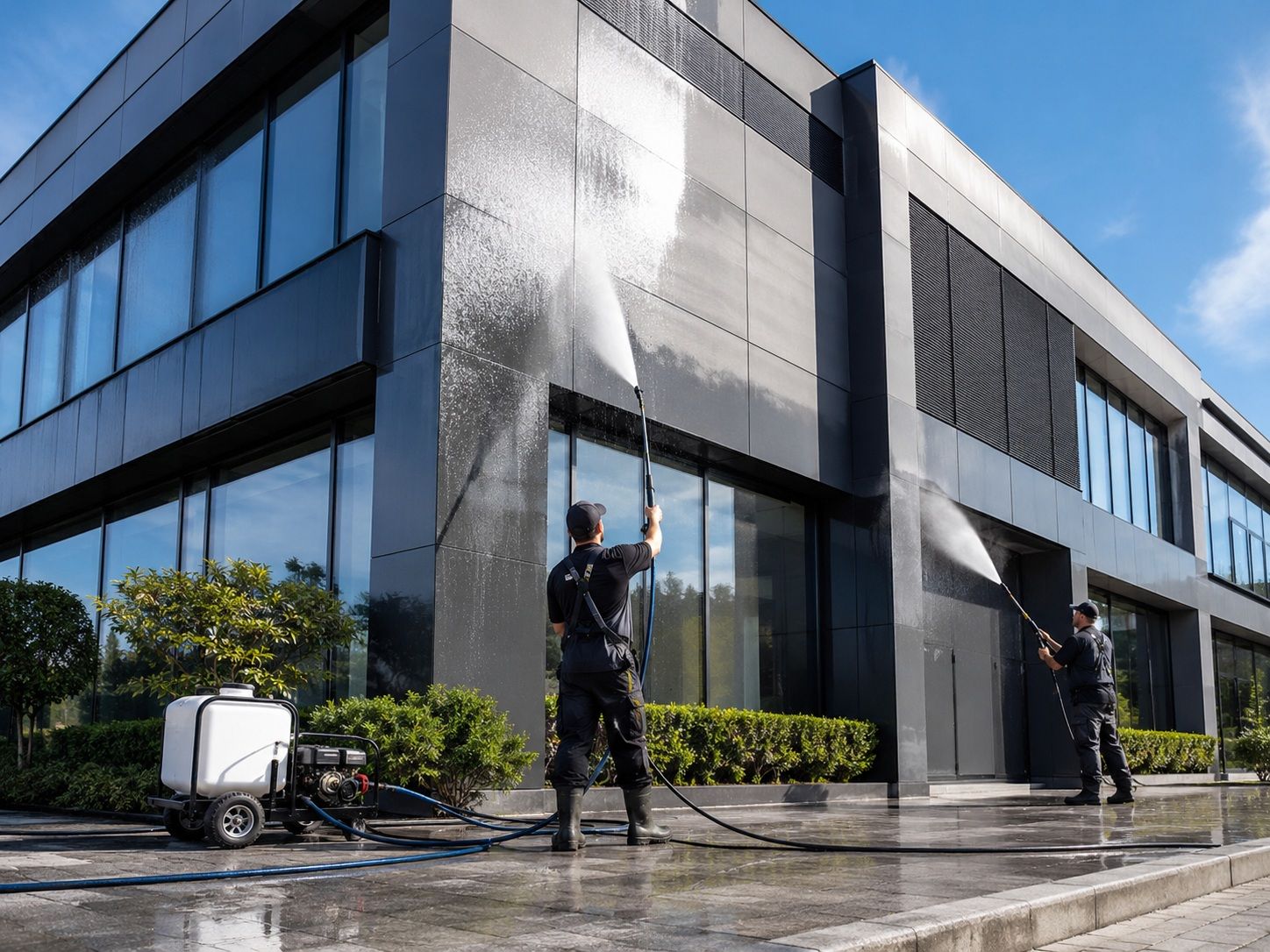
High-Rise Building Cleaning: What Methods Are Used and What Do They Cost?

A building's exterior is exposed to everything - vehicle exhaust, biological growth, airborne pollution, rain & UV degradation. Over time, these elements leave visible & structural marks that routine maintenance cannot address. Commercial building washing is the process of cleaning external surfaces systematically using pressure washing, soft washing or a combination of both, matched to the specific materials as well as contamination type present on the building.
What the Process Actually Involves
Building washing is not a single technique applied uniformly. A professional contractor assesses the facade material first - concrete, brick, render, glass, aluminium cladding or composite panels - & selects the appropriate method & pressure level for each surface. Pre-treatment chemicals are applied to break down biological growth, carbon deposits & mineral staining before water is introduced. This reduces the pressure needed & protects surface coatings from mechanical damage. Post-rinse inspection confirms that contamination has been fully removed rather than redistributed.
For multi-storey buildings, the process involves working at heights using elevated work platforms, rope access or water-fed pole systems depending on the building configuration & access constraints. Each method has specific licensing & safety requirements that professional contractors carry as standard.
Why It Goes Beyond Appearance
Commercial building washing preserves the integrity of facade materials over the long term. Mould & algae retain moisture against surfaces, accelerating deterioration of render, sealants & mortar joints. Carbon & pollution deposits, if left unchecked, stain permanently & require costly remediation. On buildings with metal cladding or curtain wall systems, biological growth accelerates oxidation & compromises joint sealants - creating water ingress pathways that are expensive to trace & repair.
From a commercial standpoint, a visibly clean building supports tenant retention, strengthens street presence for retail & hospitality operators & signals to customers as well as investors that the property is actively managed.
How Often Buildings Need to Be Washed
Frequency depends on location, building height, surrounding environment & facade material. Buildings in high-traffic urban areas or near industrial zones accumulate contamination faster than those in low-density locations. As a general benchmark, most commercial building washing programs run on an annual or biannual cycle, with spot treatments scheduled as needed between full washes. Coastal buildings exposed to salt air often require more frequent attention due to accelerated biological growth & corrosion risk.
Read a similar article about commercial property cleaning info here at this page.